From late June to early August, AtLAST team members led and participated in four international and AtLAST-focused conferences and workshops. These events helped promote AtLAST to the wider community and fostered valuable discussions about the project’s future direction.
2026
A key goal for AtLAST is to integrate sustainability into the astronomical infrastructure. Members of the team based at the Department of Technology Systems in Oslo visited several institutes and facilities across Chile to foster these discussions.
The Iberian AtLAST Days was held at the Universidad Complutense de Madrid (UCM) on 4-5 June, with over 50 participants joining. The event followed immediately after the AtLAST consortium meeting, also hosted at UCM the previous three days.
The AtLAST consortium gathered at the Universidad Complutense in Madrid from 1 - 3 June 2026 for their annual meeting, bringing together around 50 in person participants and a further 20 participants online. The meeting focused on consolidating the telescope design, reviewing progress across all work packages, and refining the ambitions that will shape the future AtLAST.
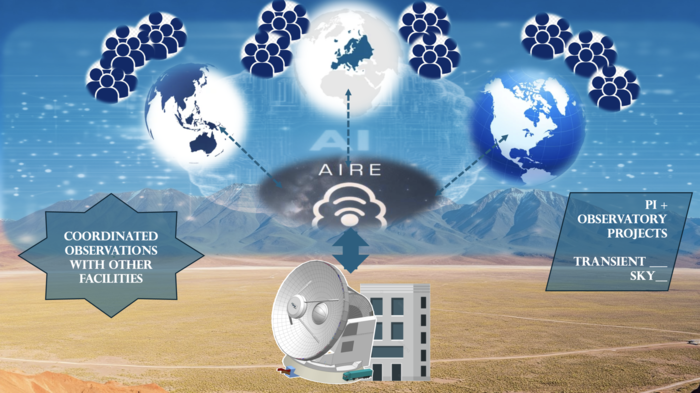
We need your help to determine the future direction of AtLAST user support!
From 28 - 31 March, five members of the AtLAST team visited the high site at Chajnantor to install instruments that will help further characterise the potential AtLAST sites, part of the ongoing efforts of Work Package 7.
The Sun’s active nature has the potential to disturb our day-to-day life through the disruption of power grids, satellites and global communication systems. To protect a technology‑dependent society, we must observe the Sun with enough detail to understand, and ultimately predict, these disruptive events. Current facilities have provided great progress in our understanding of the Sun, but the unique capabilities of AtLAST will transform this field of research.
AtLAST is designed as a once-in-a-generation, transformational facility for the coming decades. At least 28 white papers supporting AtLAST were submitted to ESO's Expanding Horizons call, spanning topics from the solar system to cosmology and highlighting the wide-reaching scientific potential of AtLAST.