
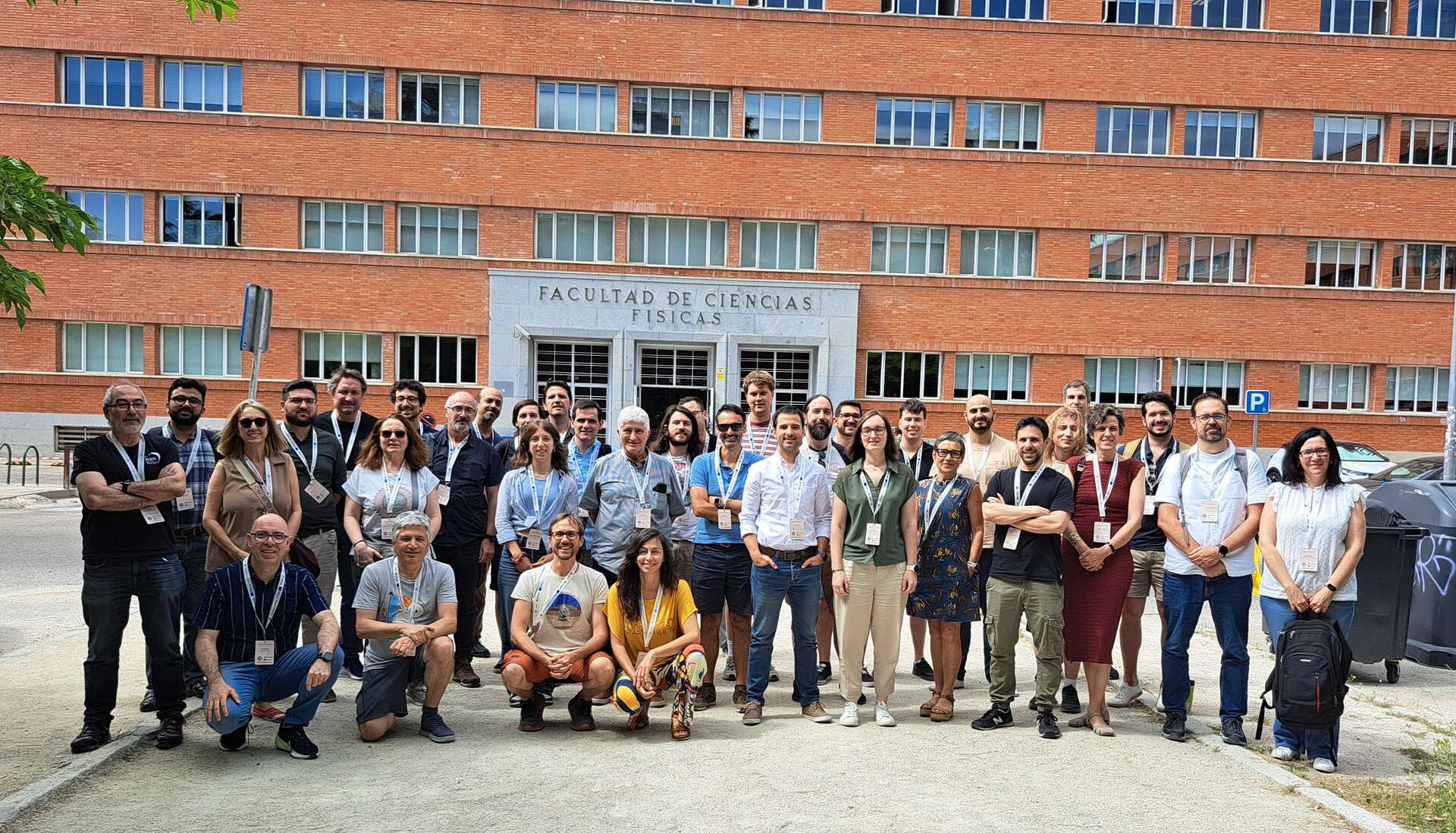
Bringing communities together
The meeting brought together the Spanish and Portuguese millimeter and submillimeter astronomy communities for the first time around AtLAST, with the goal of fostering scientific and technical synergies, promoting exchange among research groups, institutions, and interested teams, and opening new avenues of collaboration for the project.
The programme covered all aspects of AtLAST: scientific goals and possibilities, simulation of observations, instrumentation, data management, development of analytical tools, sustainability (one of the project's pillars), and potential synergies with other astronomical infrastructures.
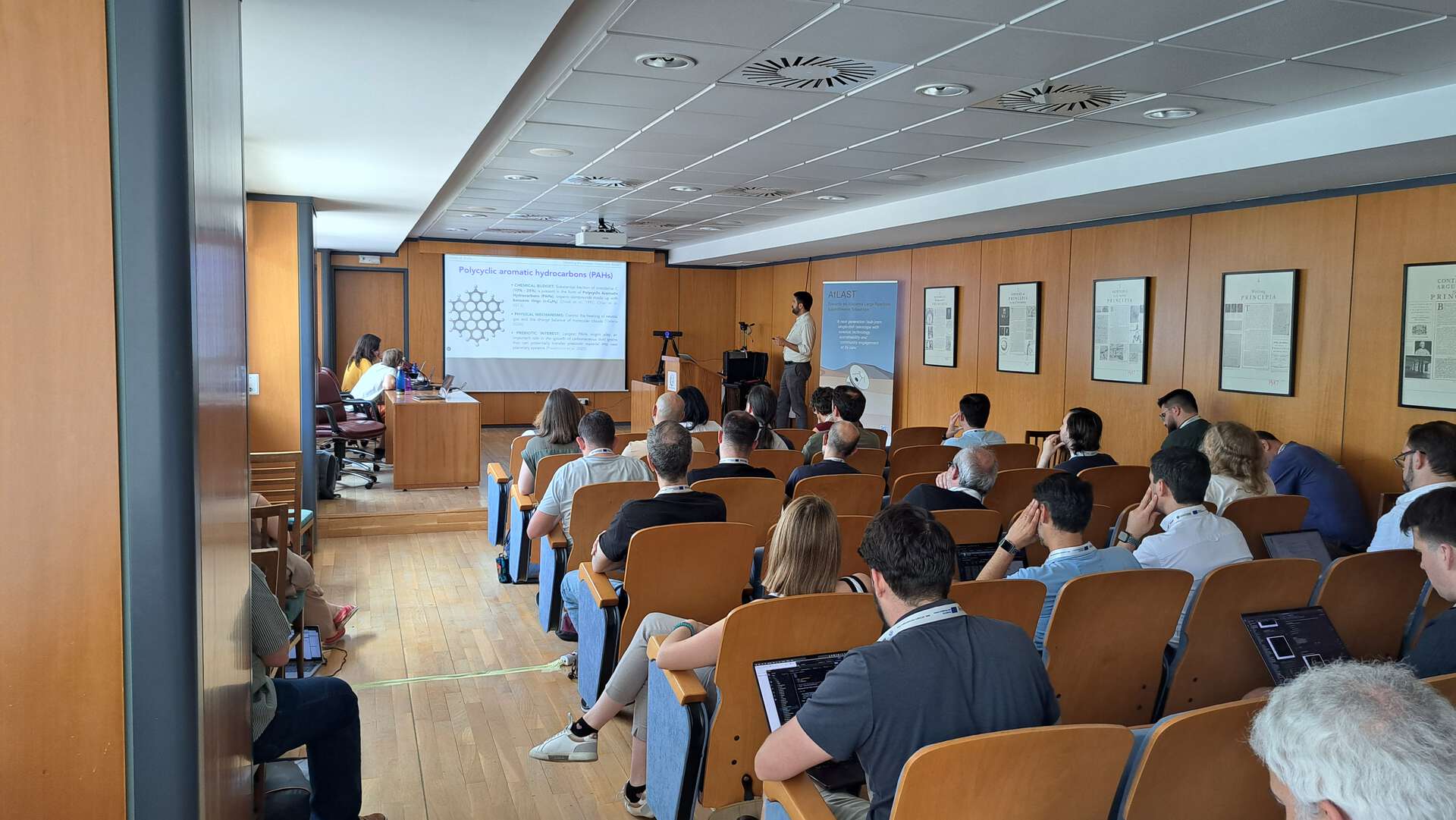
A wide range of science and technology
The workshop opened with three introductory talks framing AtLAST's scientific ambition and conceptual design, followed by two days of presentations covering a wide range of science cases: from prebiotic molecule detection and the chemistry of the interstellar medium, to star and planet formation, high-redshift galaxy clusters, the magnetised cosmic web, and time-domain science with pulsars and fast transients. Cosmological probes such as magnification bias and CMB synergies were also discussed, alongside a dedicated session on sustainability and the design of off-grid renewable power systems for the Atacama site.
The programme further addressed instrumentation and technical development, including advances in KID detector technology and observation simulation tools, as well as synergies with facilities such as the IRAM 30-m telescope, the Yebes observatory, the Vera Rubin Observatory/LSST, and SKAO.
The excitement for AtLAST!
Structured discussion sessions and a community survey helped identify priorities and gauge the potential of the Iberian community to contribute to AtLAST's scientific and technological development. To open the discussion, participants were invited to take part in a real-time quiz on AtLAST's most exciting capabilities, which revealed a strong consensus: the community overwhelmingly values AtLAST as a powerful survey machine, capable of mapping large areas of the sky with unprecedented sensitivity at (sub-)millimeter wavelengths, without forgetting the sustainability aspect of the project.

The Iberian AtLAST Days highlighted that numerous Spanish and Portuguese groups are currently leading research lines included in the AtLAST reference scientific plan. These cover a remarkably broad range of topics: from astrochemistry and the emergence of prebiotic molecules in interstellar space, to a thorough mapping of the ISM in nearby galaxies, and the lifecycle of stars from AGB winds to planetary nebulae. The reach extends further still into the extragalactic domain, with groups leading efforts on high-redshift galaxy clusters, gas flows around early galaxies, and cosmological probes — including the use of submillimeter magnification bias and the search for dark matter axions through neutron stars in the inner Milky Way. Taken together, this breadth of participation reflects the strength and diversity of millimeter and submillimeter astronomy in this community.
