
The perfect home for submillimeter telescopes
The Chajnantor Plateau is host to some of the most advanced astronomical facilities in the world. A combination of its elevation (5100m above sea level) and excellent weather conditions make it an excellent home for astronomical facilities, and as such has been chosen for the future site of AtLAST. However, the exact location is still to be decided, with two sites still in the running. Detailed characterisation of the two sites is ongoing to determine which site is most suitable for AtLAST.
Characterising the wind on Chajnantor
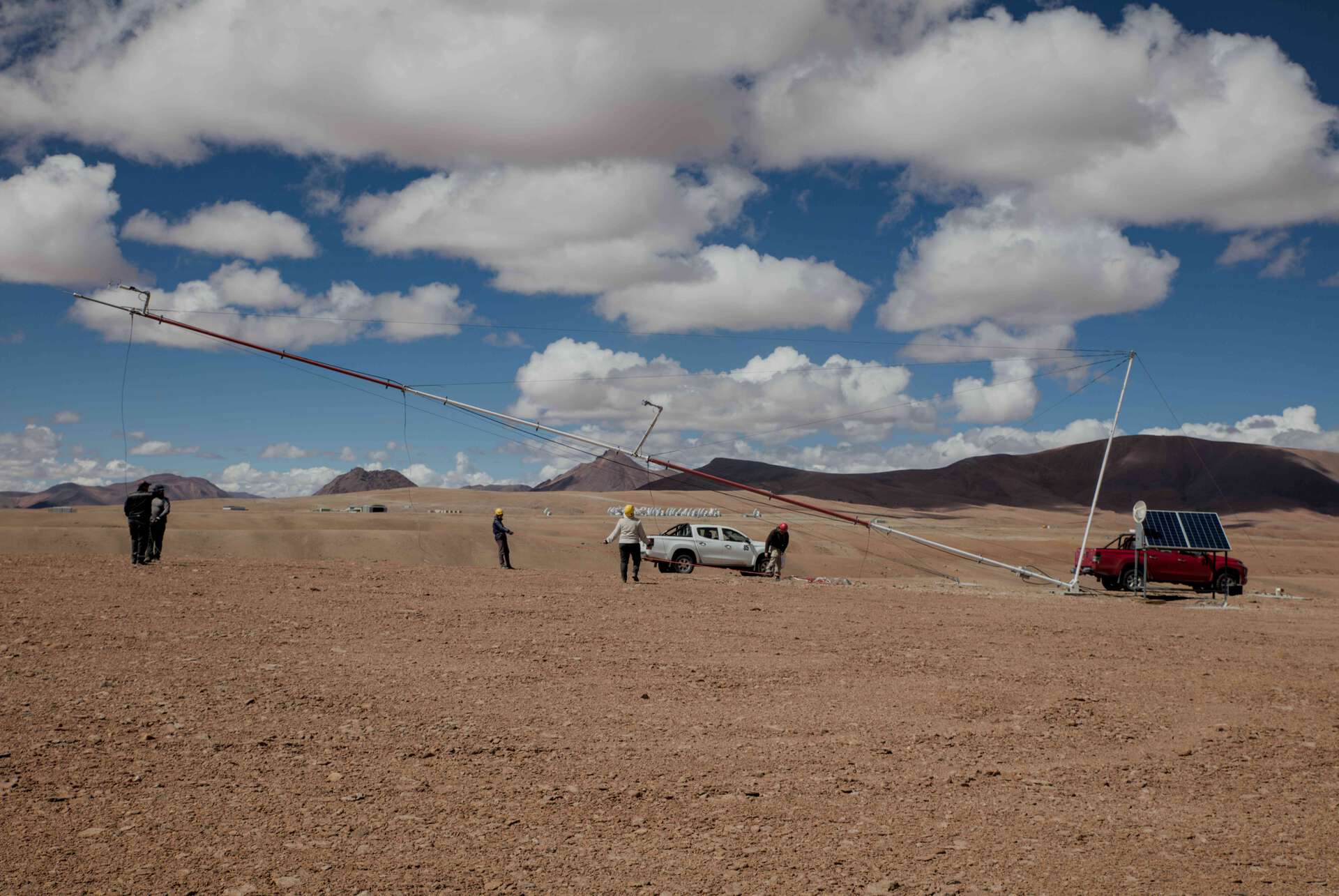
Since February 2023, instruments known as sonic anemometers have been installed to record the wind properties at the two potential sites for AtLAST. These measurements provide crucial information to the AtLAST team and will help to determine which site is preferable, as well as informing the telescope design and operations teams with real data to work with, rather than just simulations. The current results were highlighted in the recent AtLAST Forum talk by Pamela Pizarro:
During this visit, the team set out to identify the origin of spurious signals seen in the data of one anemometer and found out the issue was due to a faulty power supply. This was fixed after an extensive debugging procedure, which included lowering the tower and performing major tower maintenance. At such extreme elevations and conditions, we are really pushing the limits to what is possible and even simple devices (such as a power supply) need to be checked both in the lab and on the high site.
In parallel to the activities on the wind towers, Andrey Baryshev worked on the installation of a new geostationary satellite tracking interferometer that will characterise distortions to astronomical signals across the main dish of AtLAST. A first interferometer is now operational on site II, and an identical type of this system will soon be installed on site I to provide a real-time comparison between both potential sites. These data will then be joined with the wind data from the towers to provide a full characterisation of daily and seasonal variations at both sites.
Is the soil suitable for AtLAST?
In addition to wind studies, it is also important to understand the soil properties and its suitability for supporting a structure as large and as heavy as AtLAST. Soil studies have previously been performed close to site I (specifically for the APEX site). However, site II will need a soil study of its own and therefore preparations for this were made during this visit. This was done by Carlos De Breuck and Juan-Pablo Pérez-Beaupuits, who determined the exact coordinates of the edges of Site II that can be provided to the chosen company to perform the soil study.
Overall, plans are well underway to characterise the two potential sites for AtLAST and the information provided on these site visits (and by the instruments installed) will help guide the site selection and help us choose the future home for AtLAST.
Images from the visit
See more images here: Site Visit March 2026


